


Nothing has performed out as anticipated for the reason that UK issued its EV mandate, and trade needs to tweak the route ahead. By Megan Lampinen
In December 2025, the European Fee dialled again plans to part out inside combustion engine (ICE) autos by 2035, providing a extra versatile strategy to automotive CO2 discount. Many gamers within the UK need comparable concessions from the federal government, claiming a spread of dire penalties if the present necessities stays in place. “If the hole between electrical car (EV) ambition and demand stays as it’s, the UK’s attractiveness not simply as market but additionally as a producing location evaporates,” warned Mike Hawes, Chief Govt of the UK’s Society of Motor Producers and Merchants (SMMT). “Decarbonisation might imply de-industrialisation.”
Hawes was talking on the opening of the SMMT’s Electrified convention in London on 12 March, the place trade gamers gathered to discover the zero-emission car transition. An enormous focus was the looming phase-out of ICE autos. Below the Zero Emission Automobile (ZEV) mandate, OEMs have to promote an rising proportion of EVs yearly, beginning at 22% in 2024 and rising to 80% by 2030 and 100% by 2035. The message from the trade is that assembly these targets has grow to be unviable within the wake of sudden trade developments.
Again in 2020, then Prime Minister Boris Johnson outlined a “Ten Level Plan for a Inexperienced Industrial Revolution”, calling for an ICE part out by 2030 and a ZEV mandate by 2035. On the time, no one anticipated Russia’s invasion of Ukraine, US tariff chaos, or a battle in Iran. There have been additionally nice expectations that public charging infrastructure would increase quickly together with native gigafactory capability, whereas battery and power prices would decline. All of those components have been alleged to bolster EV demand. Evidently, the forecasts haven’t panned out. The query is whether or not or not this now deserves a change in regulation.
“This trade stays completely dedicated to internet zero, however generally to succeed in a vacation spot your sat nav re-routes you,” mentioned Hawes. “When the info change, you need to adapt.”
ZEV ambition vs actuality
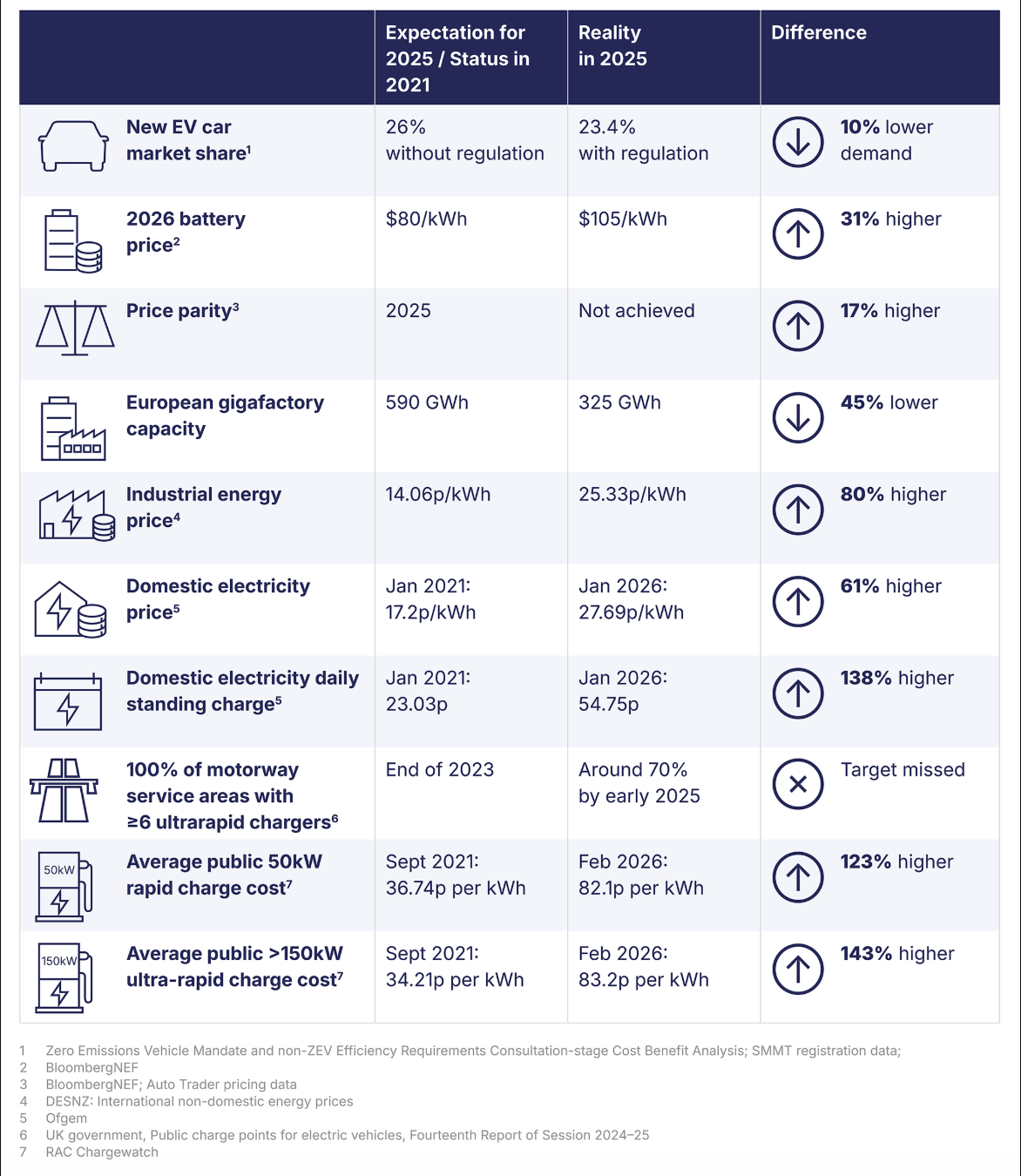
The price of compliance
Simply because the SMMT and trade have been convening in London, the UK Division for Transport (DfT) was releasing automaker ZEV mandate compliance knowledge from 2024, the primary yr of necessities. It confirms that each the automotive and van markets exceeded the preliminary targets, primarily by means of the sale of EVs but additionally by means of numerous flexibilities like CO2 credit, borrowing allowances from future years, and CO2 conversion flexibilities from effectivity enhancements in non ZEVs.
However compliance at this stage isn’t stunning. As Hawes noticed: “Automakers don’t have a selection; they can not not comply.” Technically people who don’t comply pay a advantageous, however what Hawes is worried about is the price of compliance.
EV volumes within the UK are undoubtedly rising. Information from the SMMT exhibits that new EVs presently account for one-quarter of the brand new automotive market. In comparison with about 6% in 2020, that may very well be seen as successful. Nevertheless, these gross sales got here within the wake of hefty monetary incentives. In 2025, the typical low cost on an EV was £11,000 (US$13,200), which isn’t sustainable in the long run.
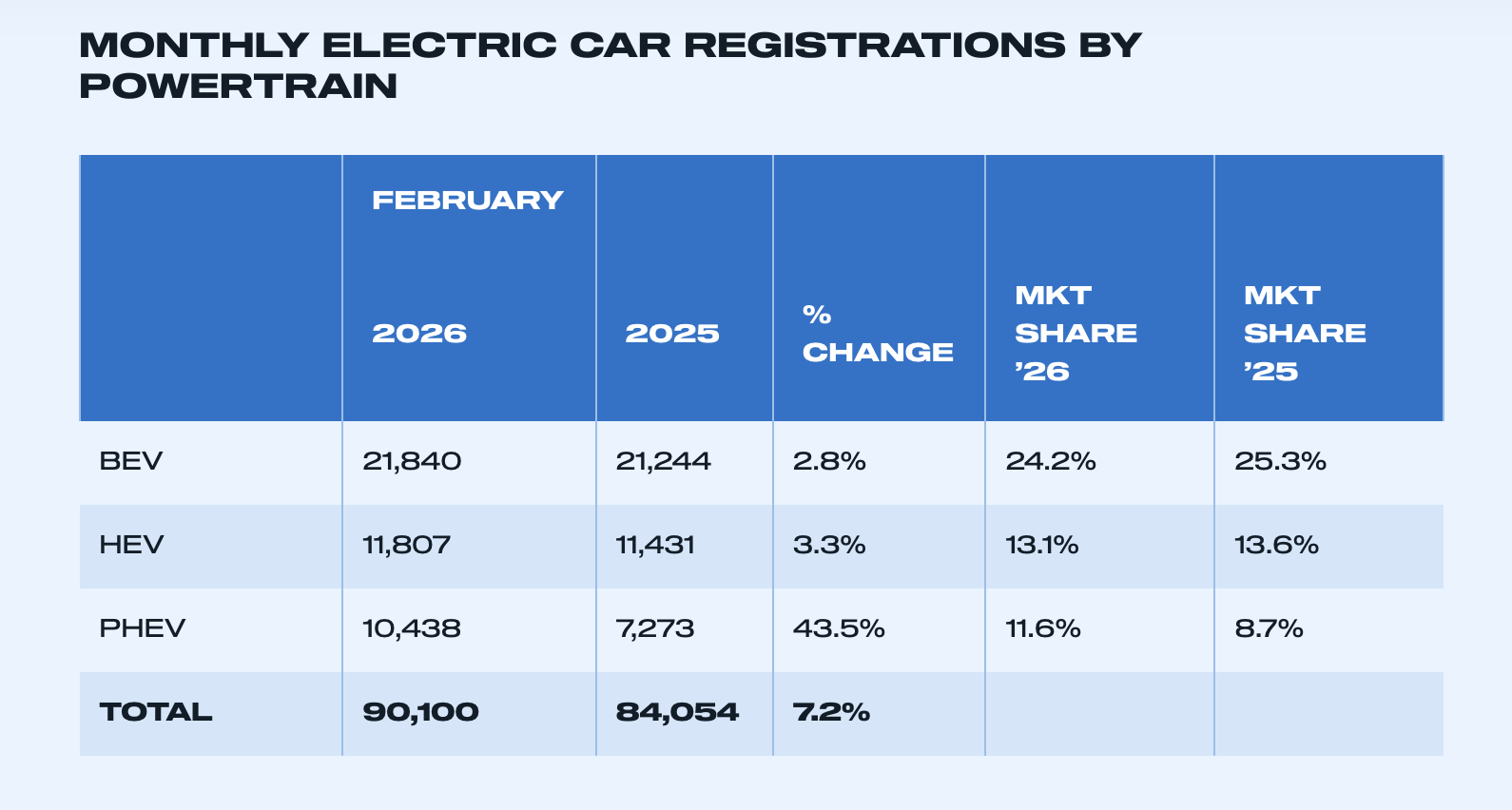
To satisfy the 2028 targets, the trade wants greater than double the share of EV automobiles and quadruple the share of EV vans. By 2029 the flexibilities for compliance will disappear. “No person thinks we are going to get to 80% electrical automobiles or 70% electrical vans by 2030,” mentioned Hawes.
What does the trade need?
The SMMT needs the federal government to instantly convey ahead its deliberate overview of the mandate, presently set for 2027. However whether or not it in the end needs an extended timeline for compliance or a whole rethink about mandates basically is unclear, and Hawes declined to offer any element when pressed: “We simply say, ‘Have a overview. Have a look at the info of the place we’re when it comes to underlying demand, price and infrastructure. Then decide if the regulatory and monetary framework is match for goal’.” General, Hawes’ feedback suggest he would love one thing modelled on the extra versatile approaches taken by the EU and Canada, although not the entire reversal seen within the US.
Martin Sander, Member of the Board of Administration for Gross sales, Advertising and After Gross sales at Volkswagen Passenger Automobiles, was clearer in his message to the UK authorities: “Cease speaking concerning the mandates…The language we’re utilizing to attempt to handle this transition is incorrect. Let’s speak about EV advantages and handle the true or emotional hurdles. Then it doesn’t matter if we’re at 80% in 2030 or 2033. We are going to handle the transition efficiently from each a client and a enterprise perspective.”
Nicole Shaw, Managing Director at Volvo Automobile UK, echoed these sentiments and desires to see “extra carrot than stick” within the official strategy. “No person is speaking about EVs being a greater drive, a greater expertise, or providing extra expertise. We haven’t had the possibility to have fun that as a result of we’re simply discounting on a regular basis.” She means that as a substitute of modelling itself on the EU, the UK ought to search inspiration from Norway, the place EVs now account for almost all of latest automotive gross sales. “We have to take a look at what’s working nicely. One thing like not having VAT is more practical at altering client behaviour than punitive fines.”
Opposition
Not surprisingly, environmental teams, charging infrastructure suppliers and EV-only manufacturers are adamant that the trade wants to remain on monitor and follow the plan in place.
“Drivers are already selecting electrical in rising numbers as a result of the expertise and economics make sense,” commented Fiona Howarth, Founder and Director of Octopus Electrical Autos. “The ZEV mandate supplies the knowledge that brings extra selection and higher worth to drivers. Weakening this coverage now could be the incorrect strategy. We needs to be doubling down on methods to energy our automobiles and houses with power produced right here within the UK, relatively than counting on imported fossil fuels. The main focus now needs to be on constructing confidence and accelerating the transition, not slowing it down.”
Tanya Sinclair, Chief Govt of Electrical Autos UK, factors to the latest EV gross sales figures as proof that the transition is nicely underway. “If some producers now wish to weaken the targets designed to convey these autos to market, they’re solely hurting themselves,” she warns. “Asking authorities to gradual the rollout of EVs goes in opposition to what drivers need and dangers decreasing selection simply as demand is rising. Weakening the ZEV mandate won’t cease the transition; it can solely depart the businesses calling for it additional behind.”
The argument from these gamers is that immediately’s focus must be on constructing confidence amongst drivers to speed up the transition relatively than revisiting the general route of journey. And that could be a actual chance: the UK authorities has already confirmed versatile in its environmental roadmap, beforehand making changes for hybrids. Additional amendments are extremely probably and will are available in numerous types, from outright exemptions to reductions in penalties, longer timelines for compliance, or higher flexibility in general CO2 emissions.

