


1977 Moto Guzzi 850 Le Mans Collection II
Amongst Moto Guzzi’s road-going bikes, none is extra intently related to the marque’s sporting identification than the Le Mans. Produced in varied types from 1976 by to 1993, the unique Le Mans fashions outlined Moto Guzzi’s strategy to high-performance highway bikes throughout a interval of profound change within the European motorbike business. The post-2000 machines that later adopted the Le Mans title had been essentially totally different in idea and philosophy.
Though the primary 850 Le Mans made its public debut on the Milan Present in late 1975, its origins might be traced again a number of years earlier. In 1971, Dutch racer Jan Kampen entered an overbored Moto Guzzi 750, enlarged to 810 cc, within the Zandvoort 6-Hour endurance race. Kampen had a detailed working relationship with Moto Guzzi’s legendary engineer Lino Tonti, and the success of that machine prompted Tonti to discover a larger-capacity, factory-developed endurance racer.
The consequence was an 844 cc prototype, which was entered within the 1971 Bol d’Or at Le Mans. The bike led the race for the primary ten hours earlier than engine issues dropped it to 3rd place on the end, a consequence that nonetheless demonstrated the potential of Tonti’s idea. Continued growth adopted, and by 1973, a refined prototype completed fifth on the Le Mans 24-Hour race. At this poin,t the design was successfully production-ready.
Nevertheless, company priorities intervened. Following Alejandro de Tomaso’s acquisition of each Moto Guzzi and Benelli, the group positioned strategic emphasis on selling Benelli’s six-cylinder machines because the flagship sporting fashions of the mixed group. Consequently, the Guzzi challenge was shelved quickly, and manufacturing of the Le Mans didn’t start till 1976.
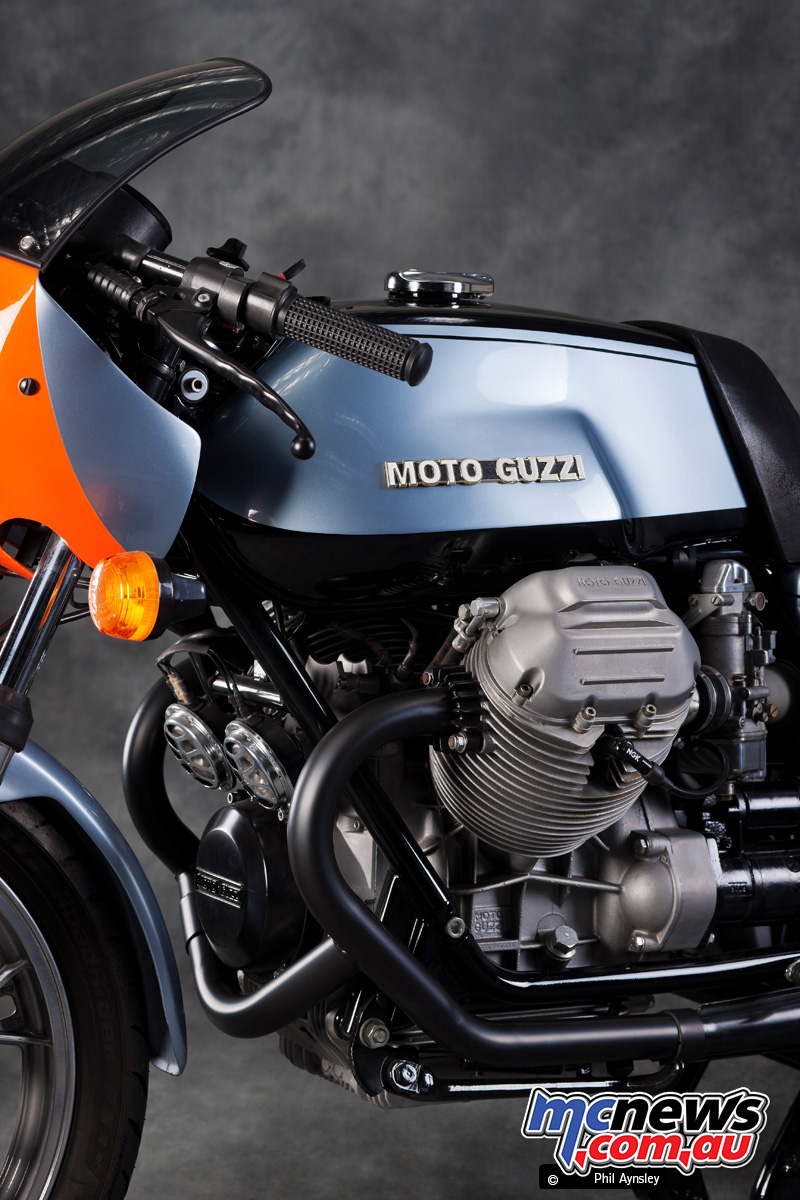
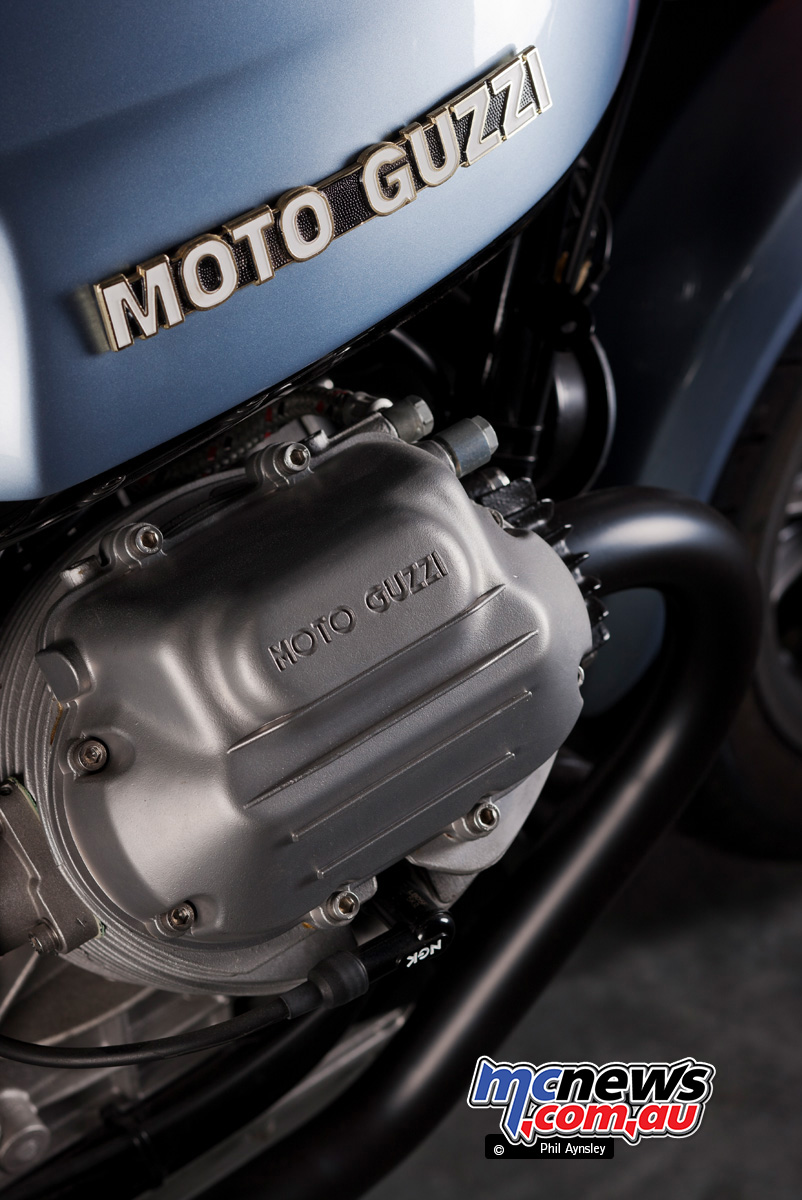
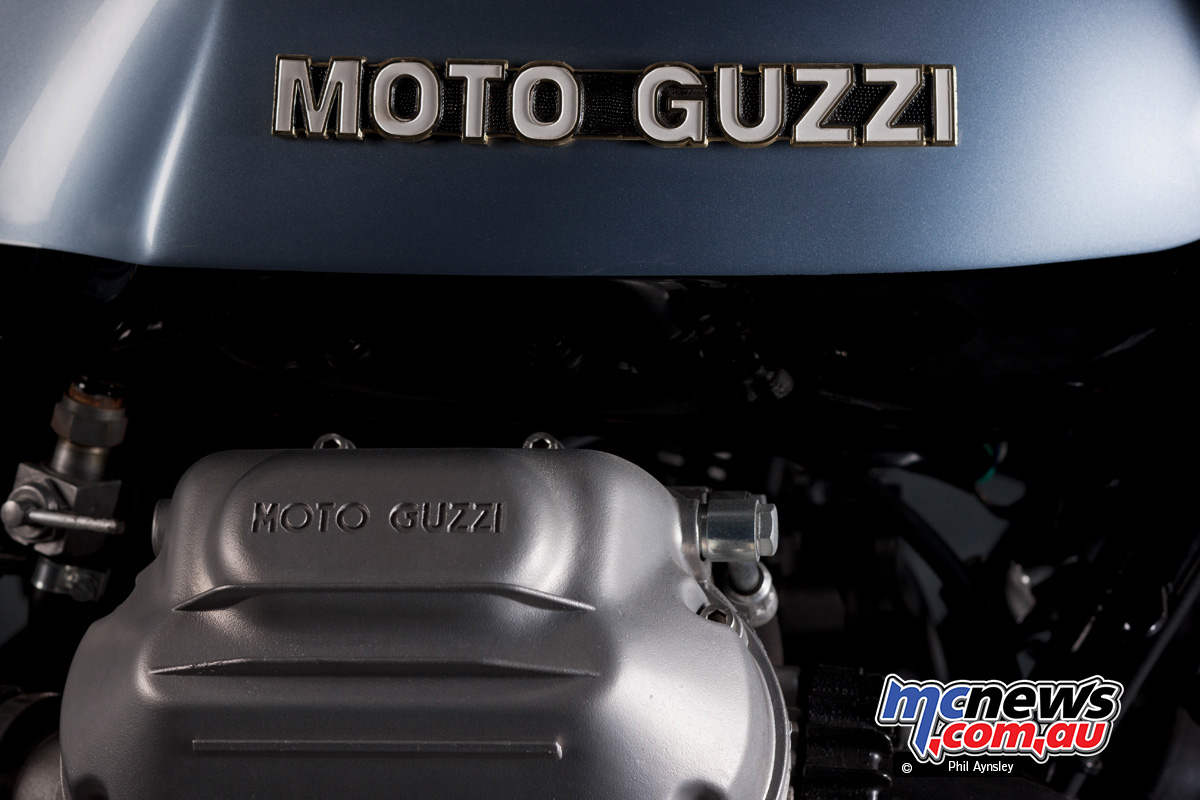
The unique 850 Le Mans, now generally known as the Collection I, was powered by the 844 cc overhead-valve V-twin developed by Tonti. The engine produced a claimed 80 horsepower, with roughly 71 horsepower delivered on the rear wheel at 7,300 rpm. Whereas the fundamental structure was shared with the 850T touring mannequin, the Le Mans engine featured greater compression pistons, bigger valves, a extra aggressive camshaft and 36 mm pumper Dell’Orto carburettors with velocity stacks. A lighter flywheel additional sharpened throttle response.
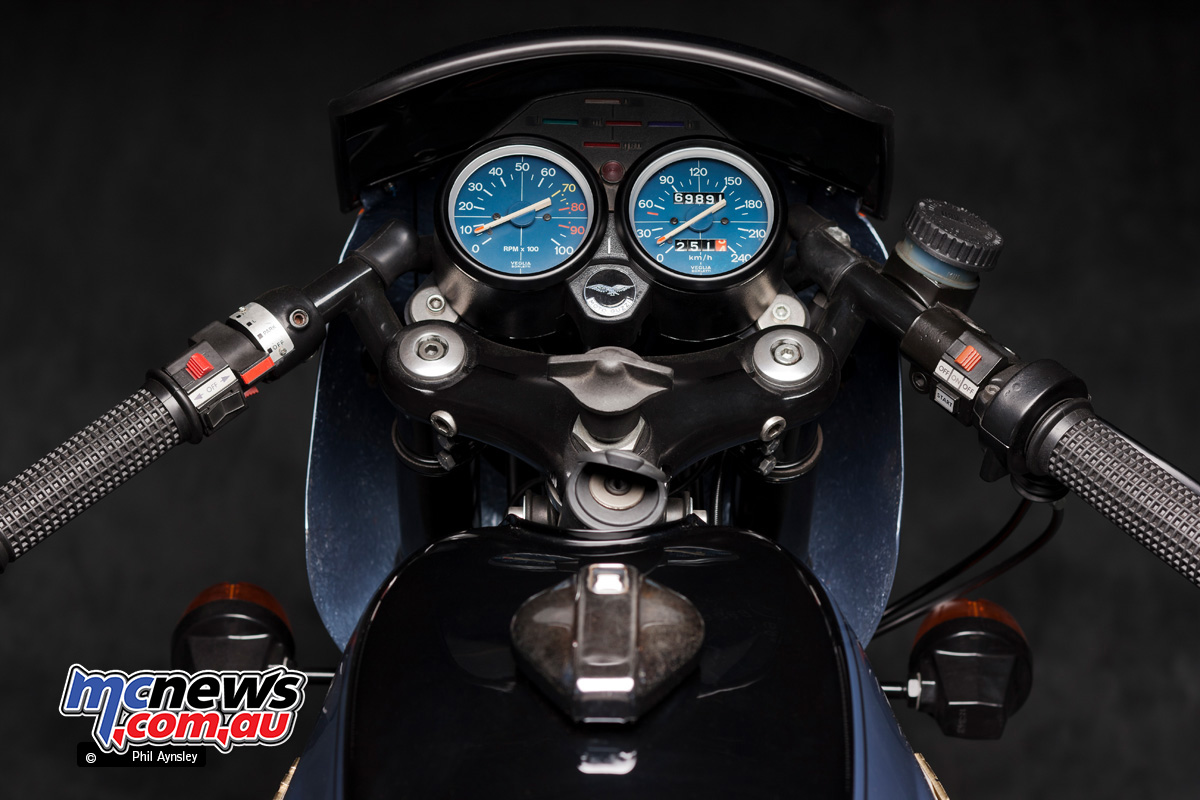
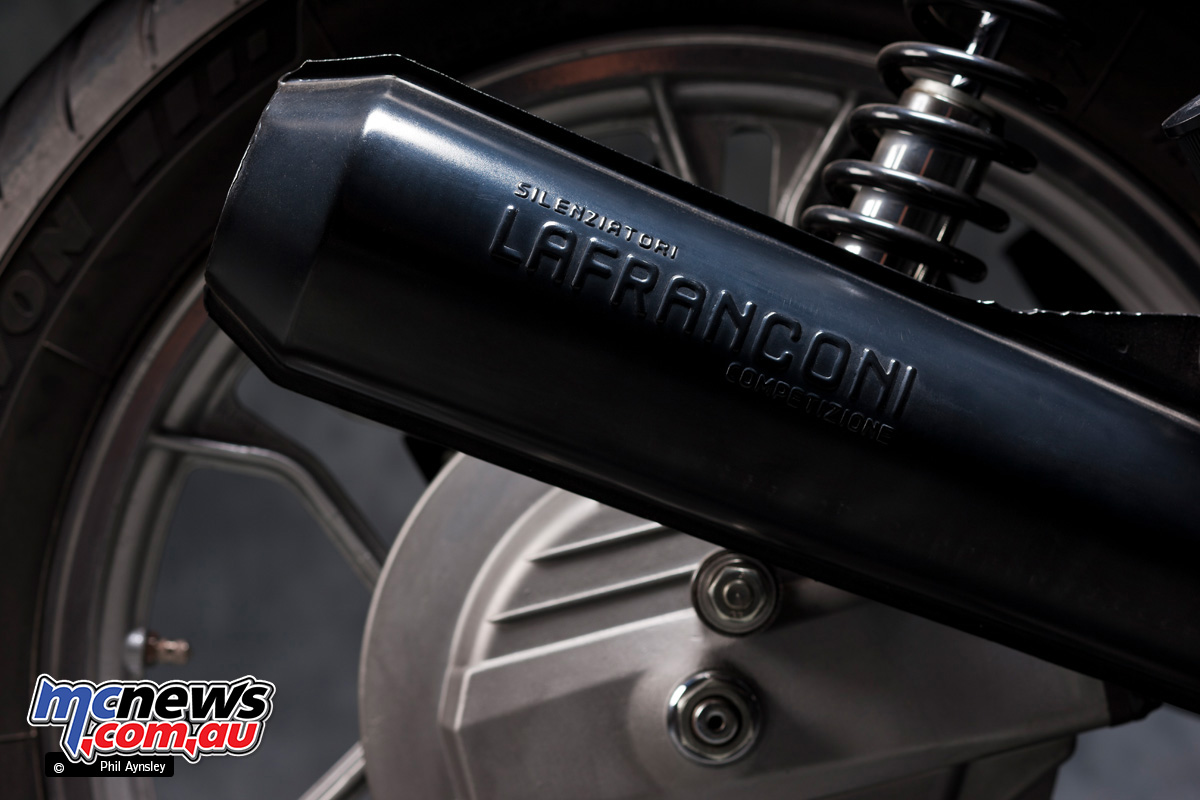
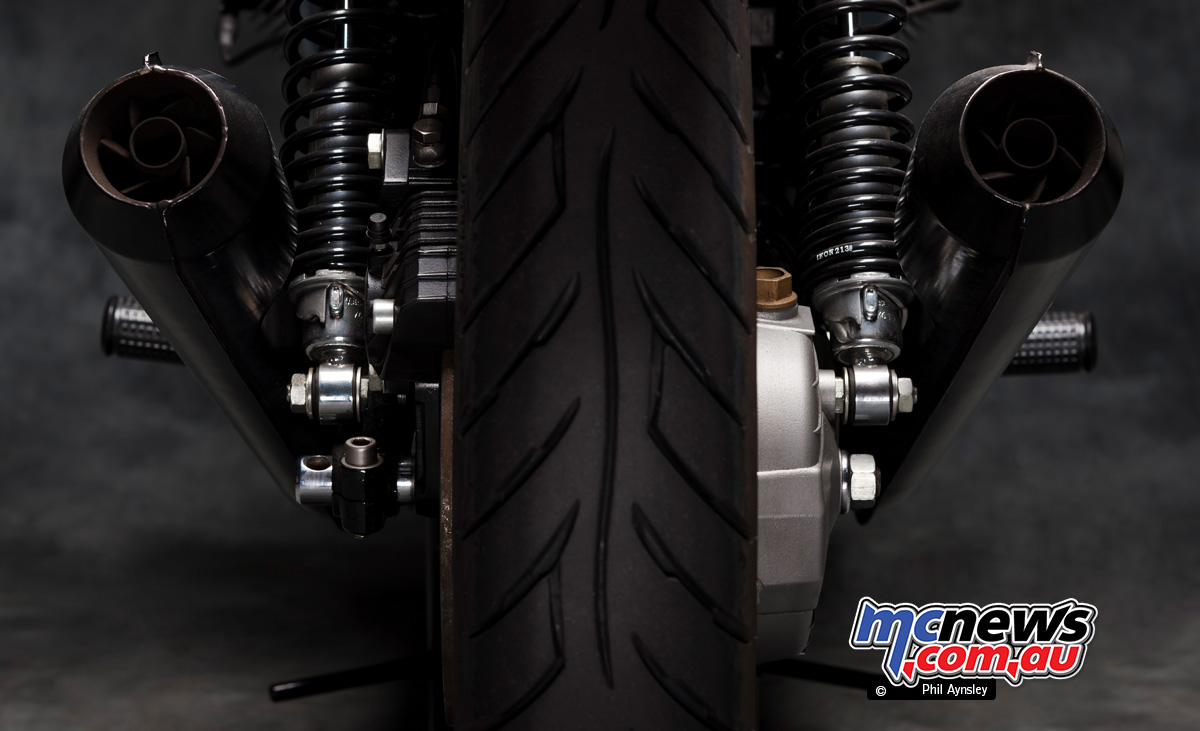
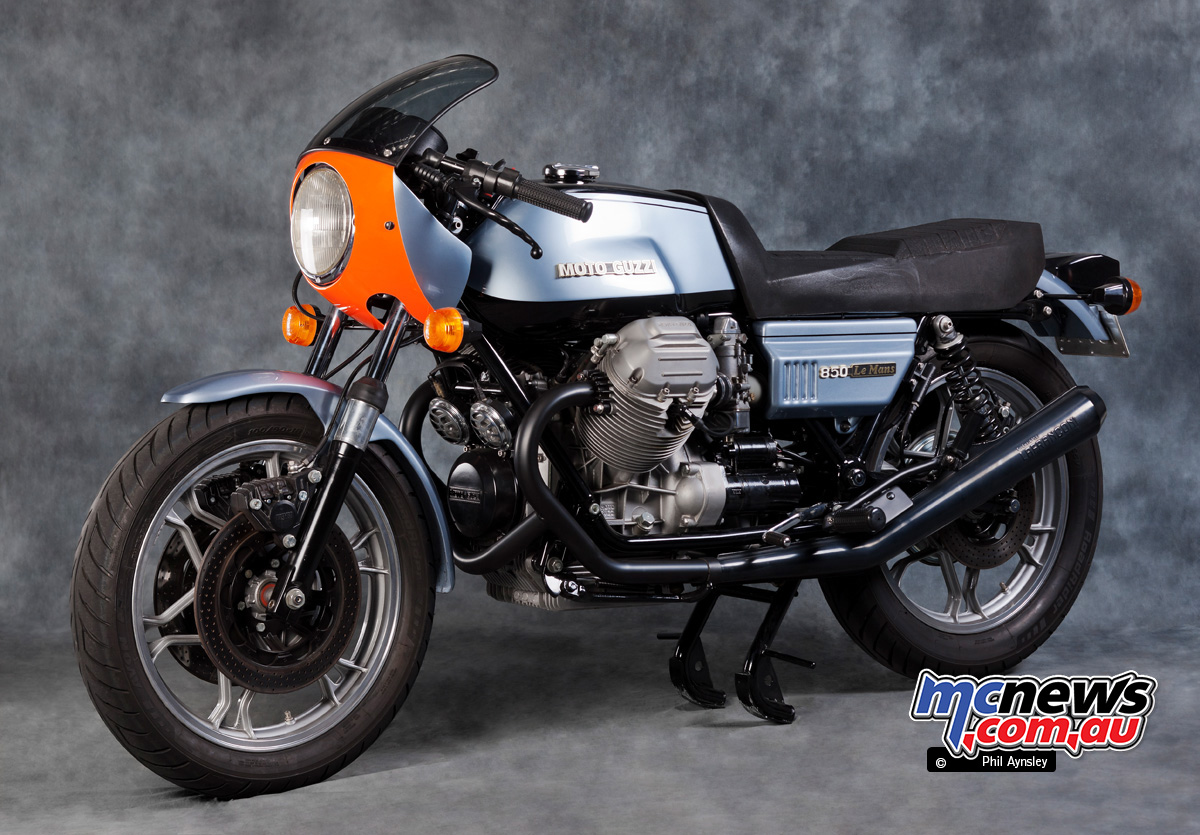
Chassis and braking mirrored Moto Guzzi’s engineering priorities of the period. The bike used built-in Brembo braking, linking the entrance and rear discs, and rode on FPS alloy wheels. The exhaust system was completed in black to enrich the distinctive red-and-black color scheme. Clip-on handlebars, rear-set foot pegs, a humped seat and a compact bikini fairing established the Le Mans as a centered sports activities machine. One notably distinctive characteristic was the day-glo painted entrance part of the fairing, supposed to enhance visibility.
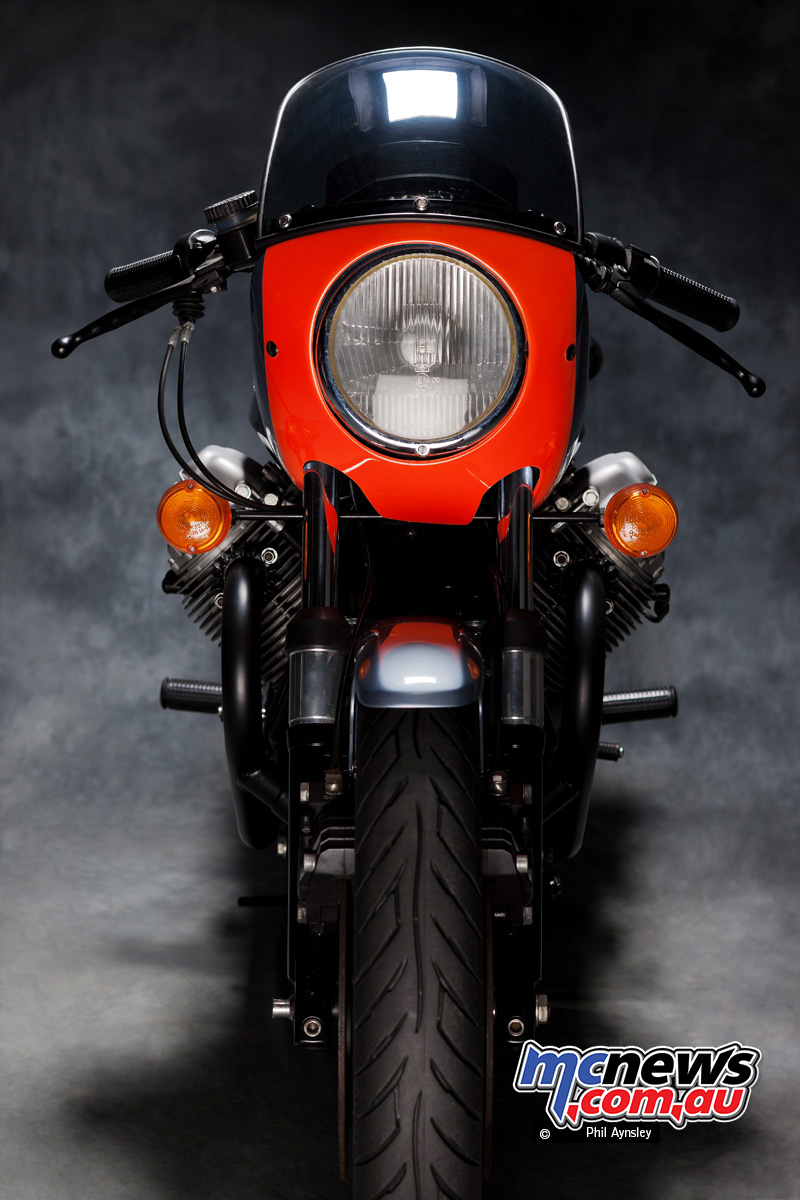
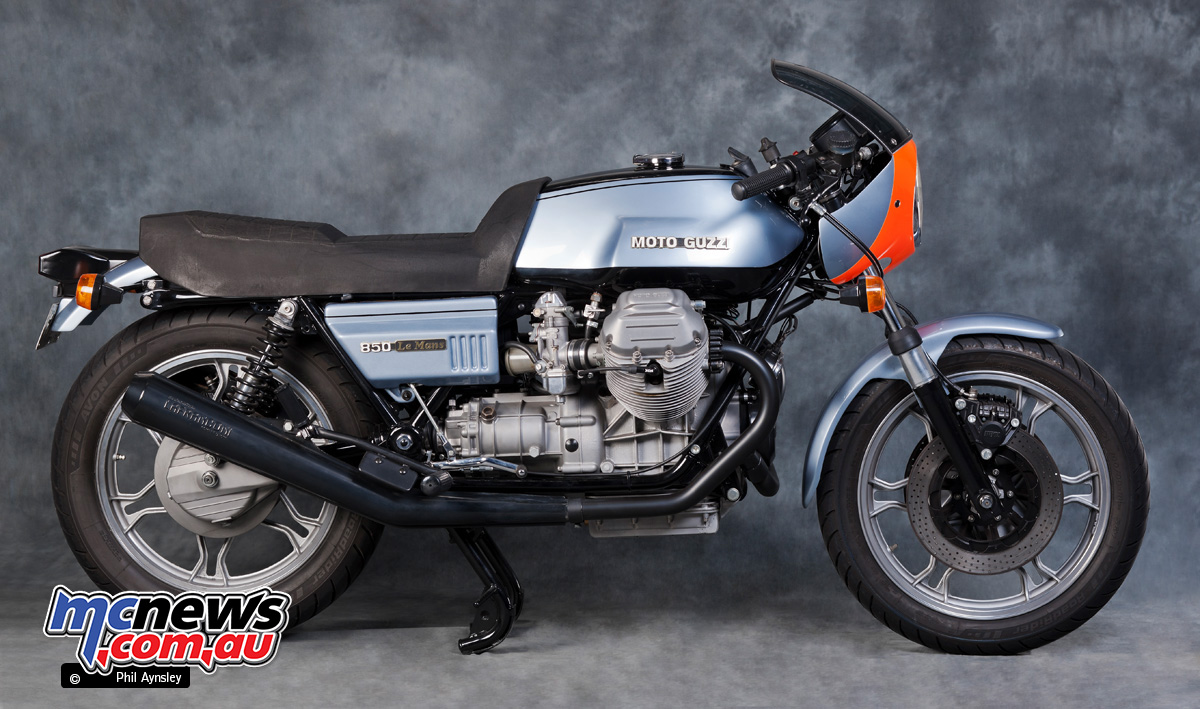
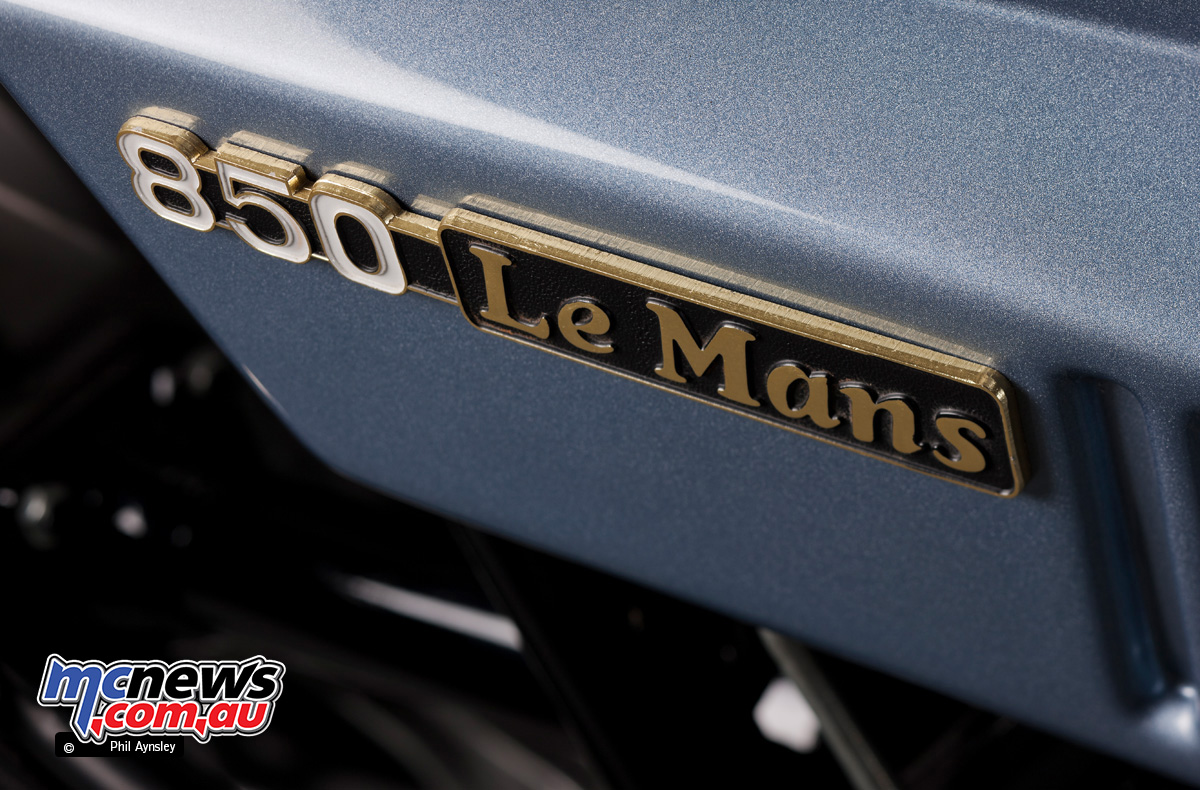
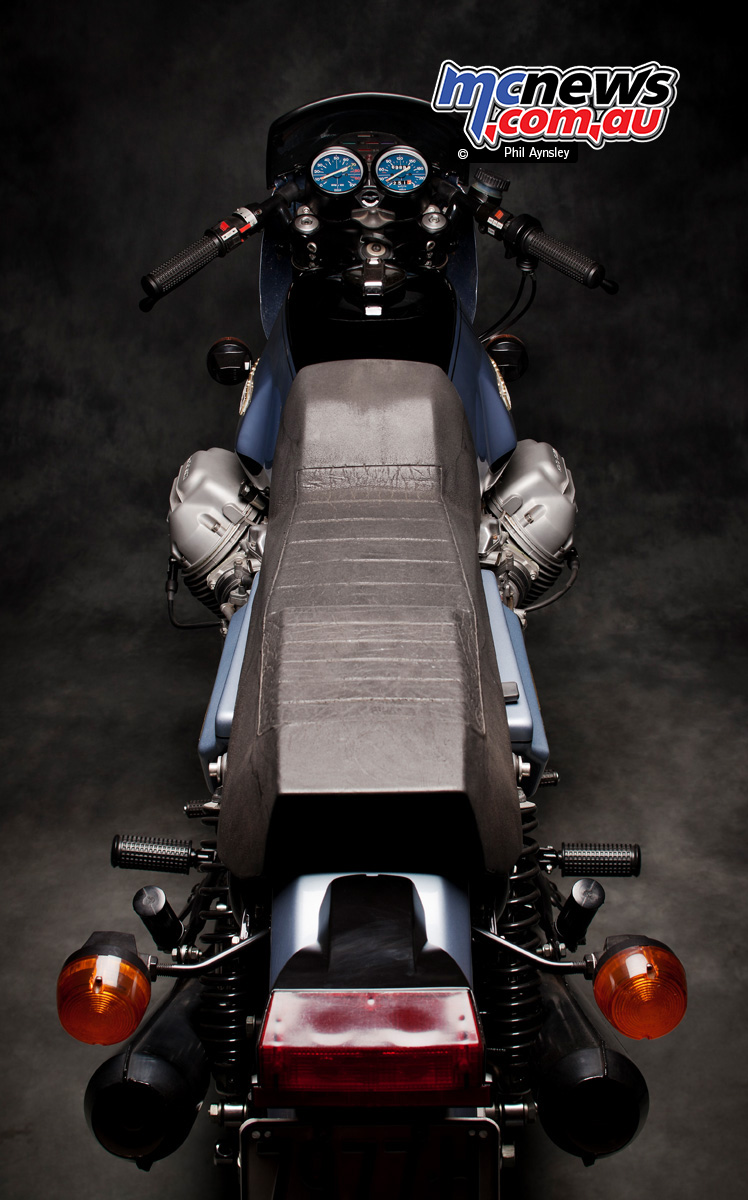
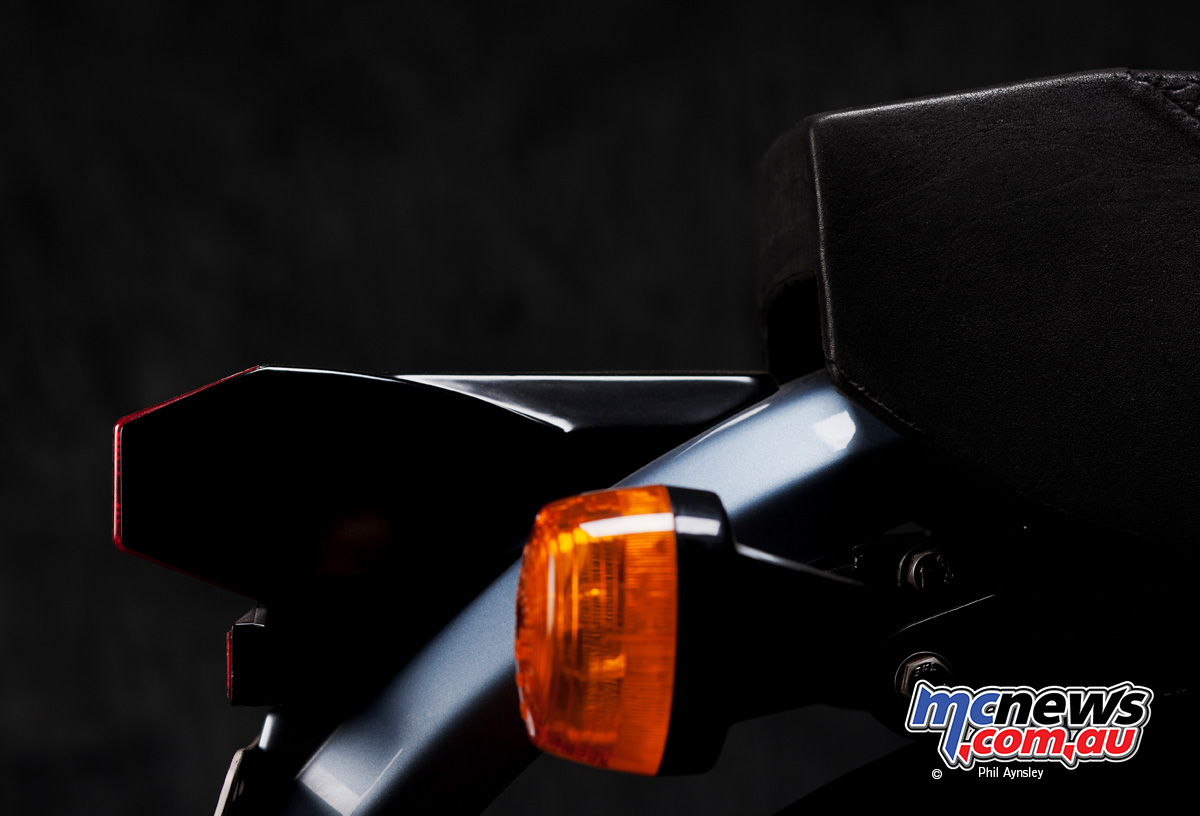
The 1977–78 Collection II mannequin, as photographed right here, launched quite a few element adjustments reasonably than a wholesale redesign. The spherical CEV tail gentle was changed with an oblong unit, the rear mudguard was revised, the decrease fork legs had been painted black, and an extended seat was fitted. Whereas most bikes retained the red-and-black livery, a restricted quantity had been produced in Ice Blue, with a fair smaller run completed in white.
In 1978, Moto Guzzi launched the 850 Le Mans II, to not be confused with the sooner Collection II designation. This model featured a bigger, three-piece fairing developed in Moto Guzzi’s wind tunnel and included an oblong headlight. Technical updates included Nigusil (Nickel-Guzzi-Silicon)- plated cylinders rather than cast-iron liners, devices borrowed from the 1000SP, and air-assisted entrance forks with the brake callipers relocated behind the fork legs.
The 1981 Le Mans III introduced extra substantial visible and mechanical adjustments. The gasoline tank, seat and fairing had been redesigned, whereas the cylinder heads adopted sq. reasonably than rounded finning. Pushrods had been repositioned farther from the bore centre, and revisions to carburation and the exhaust system had been launched to enhance efficiency and sturdiness.
From 1984, the Le Mans 1000 Mk IV marked an additional evolution of the idea. Produced till 1993 in two most important sequence, these fashions featured a 949 cc displacement and a 16-inch entrance wheel. This alteration was largely pushed by de Tomaso-era advertising and marketing concerns, with a lot of the steering geometry left unchanged, other than a barely longer wheelbase. Engine updates included bigger valves, 40 mm carburettors and a extra aggressive camshaft, whereas 40 mm entrance forks had been fitted
Suggestions relating to the 16-inch entrance wheel led to revisions on bikes produced between 1985 and 1986, which used metal steering yokes to cut back path and enhance dealing with. From 1987, Collection II machines supplied an 18-inch entrance wheel possibility with revised chassis geometry, together with Marzocchi entrance forks and Bitubo rear shock absorbers. By 1988, the 18-inch wheel configuration had grow to be normal throughout most fashions.
Produced between 1986 and 1988, the Le Mans 1000 SE (Particular Version) commemorated the 20 th anniversary of the unique 750 V7. This mannequin occupies a definite place throughout the Le Mans lineage and warrants separate dialogue.
The ultimate evolution of the vary was the Le Mans 1000 CI, bought from 1988 till 1993. It featured a frame-mounted half-fairing, an ordinary 18-inch entrance wheel, and completely new switchgear, bringing the long-running Le Mans story to a detailed.
The motorbike photographed by Phil Aynsley here’s a 1977 Moto Guzzi 850 Le Mans Collection II, a mannequin that sits on the coronary heart of the Le Mans legacy and displays Moto Guzzi’s enduring dedication to distinctive engineering and sporting character.
Moto Guzzi 850 Le Mans Collection II Specs
| Moto Guzzi 850 LeMans Collection II Specs | |
| Engine | Air-cooled, 90-degree V-Twin, longitudinally mounted, OHV pushrod, two-valves per cylinder, 4 stroke |
| Capability | 844 cc |
| Bore by stroke | 83 x 78 mm |
| Compression ratio | 10.2:1 |
| Induction | Twin 36 mm Dell’Orto carbs |
| Max Energy | 53.7 kW @ 7700 rpm |
| Max Torque | 76.4 Nm @ 6600 rpm |
| Transmission | 5-speed |
| Remaining drive | Shaft |
| Body | Duplex |
| Fork | Telescopic |
| Shock | Twin shocks with preload adjustment |
| Brakes | Twin 310 mm entrance disc brakes, 242 mm rear disc brake |
| Wheels | 3.50 x 18, 4.1 x 18 inch |
| Wheelbase | 1473 mm |
| Seat peak | 762 mm |
| Weight | 196 kg (dry) |
| Gasoline capability | 22.5 L |

