


VinFast is pursuing autonomous options which might be each cutting-edge and broadly accessible. By Megan Lampinen
Autonomous driving methods fluctuate broadly, and what works for one model could not work for one more. Whether or not it’s the in-house vs brought-in debate, the use or absence of LiDAR, or the choice on whether or not to bypass SAE Stage 3 (L3), the selections made right this moment may decide the leaders of tomorrow.
Vietnam’s quickly rising star VinFast provides an attention-grabbing case research because it seeks to chart a course from L2 ADAS right this moment to totally autonomous ‘Robo-Automobiles’ sooner or later. As a vertically built-in electrical car (EV) newcomer, it serves not solely as a challenger to China but additionally a possible template for others in a quickly evolving panorama the place legacy is as a lot of a legal responsibility as an asset.
L2 “essential” to attracting new patrons
VinFast’s present EV passenger line-up is supplied with L2 driving help options focused at each security and luxury. L2 covers an enormous vary of particular capabilities, comparable to lane preserving help, adaptive cruise management, freeway driving help, ahead collision warning, blind spot detection, clever velocity help, visitors signal recognition, and plenty of extra. When it comes to international adoption, L2 has been steadily trending upwards. “Wanting on the historical past of ADAS adoption, the penetration of L2 techniques elevated from roughly 15% in 2011 to about 90% in 2024,” says Nguyen Van Duong, International Deputy Chief Govt of VinFast and Director of the corporate’s ADAS/AD Analysis Institute. “This means that L2 ADAS is on the best way to changing into a must have for all new passenger vehicles in all markets. In different phrases, it’s essential to have ADAS L2 system to draw new patrons any longer.”
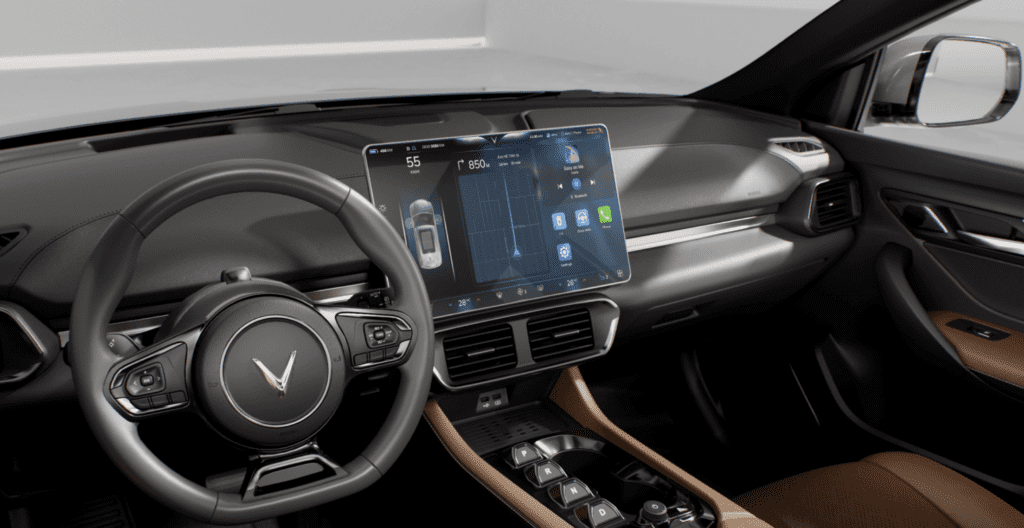
Up subsequent is an upgraded L2++ system, at present present process pilot testing on the VF 8 and VF 9 fashions, with particular options but to be confirmed. However after that, VinFast would possibly skip L3 and go proper to L4. Solely a handful of manufacturers supply L3 techniques in the marketplace right this moment. “L3, or conditional automation, represents a troublesome regulatory hurdle as a result of it operates in a gray zone the place the car manages driving, however a human have to be able to intervene inside seconds,” notes Van Duong. Quite a few different gamers have expressed the identical issues.
“Our subsequent step is determined by the particular want of every particular person market,” he provides. “Issues are altering in a short time these days. We’re creating each techniques in-house, however from a strategic perspective, we see extra potential to leap on to L4 because it brings extra worth to prospects and leverages our superior driving know-how on the similar time.”
Autobrains collaboration
Central to VinFast’s autonomy roadmap is Israeli AI skilled Autobrains. It first invested within the know-how firm a number of years in the past, and the 2 have labored collectively on L2 techniques. In January 2026 they introduced an prolonged collaboration to work on each L2++ techniques and a brand new autonomous car structure “able to remodeling any automotive right into a self-driving one.”
Commenting on the selection of Autobrains as a accomplice, Van Duong tells Automotive World: “It’s a start-up with fairly robust benefits by way of superior AI know-how and agility.” Autobrains emerged from AI tech firm Cortica and was spun off in 2019 to give attention to unsupervised AI for automotive purposes. It believes the important thing to unlocking automated and autonomous driving lies within the creation of a neural internet that learns by itself, processing and decoding knowledge from a car’s environment in actual time. Whereas Van Duong concedes that it’s a younger firm, he flags its agility and dedication as key property.
Leapfrogging LiDAR?
VinFast’s long-term imaginative and prescient for the Robo-Automotive entails a singular AI structure that reportedly eliminates the necessity for costly LiDAR, radar arrays, or high-definition maps. These are at present considered the basics for autonomous driving by most builders, with a handful of notable exceptions. As an alternative, VinFast and Autobrains consider they will leverage seven normal cameras and a compact, high-performance computing chip able to processing roughly 20 trillion operations per second. The promise: superior autonomous performance at a fraction of the fee and complexity of conventional techniques.
Nonetheless, this will likely take time, and Van Duong explains that the corporate will take a step-by-step method in the direction of robotaxis. The preliminary models will nonetheless characteristic LiDAR, radar, cameras, and ultrasonic sensors. “Solely later will we take away among the sensors, after reaching a superb maturity degree for digicam and radar-based techniques. Digital camera-based know-how is advancing every day, which allows many new areas and purposes together with autonomous driving. By observing our in-house AI know-how progress, along with Autobrain’ agentic AI, we’re assured on this path.”
Whereas digicam know-how is advancing, so too is LiDAR. System prices right this moment are a fraction of what they have been just some years in the past, however Van Duong believes there are different essential issues. “Our purpose is to maneuver superior driving know-how from early adopters to on a regular basis drivers. For that, we should realise inexpensive L4 system. It’s not simply invoice of supplies prices however the problems concerned within the manufacturing line and upkeep.” He goes on to emphasize that guaranteeing the accuracy of LiDAR over a car’s lifetime, which might simply run greater than a decade, “is an enormous problem.”
Whereas the Robo-Automotive stays some methods out, VinFast is at present evaluating completely different enterprise fashions for the self-driving car, together with direct gross sales to ride-hailing fleets and different potential partnership buildings. As for its vary of passenger vehicles, these may additionally go absolutely autonomous in some unspecified time in the future. “It simply is determined by future market wants,” he concludes. “Our final purpose is to supply full autonomy sooner or later, even in our passenger vehicles. For now, we see two parallel threads as a result of fairly completely different enterprise use-cases…however we’re dedicated to creating autonomous mobility secure, inexpensive, and obtainable to all.”

